


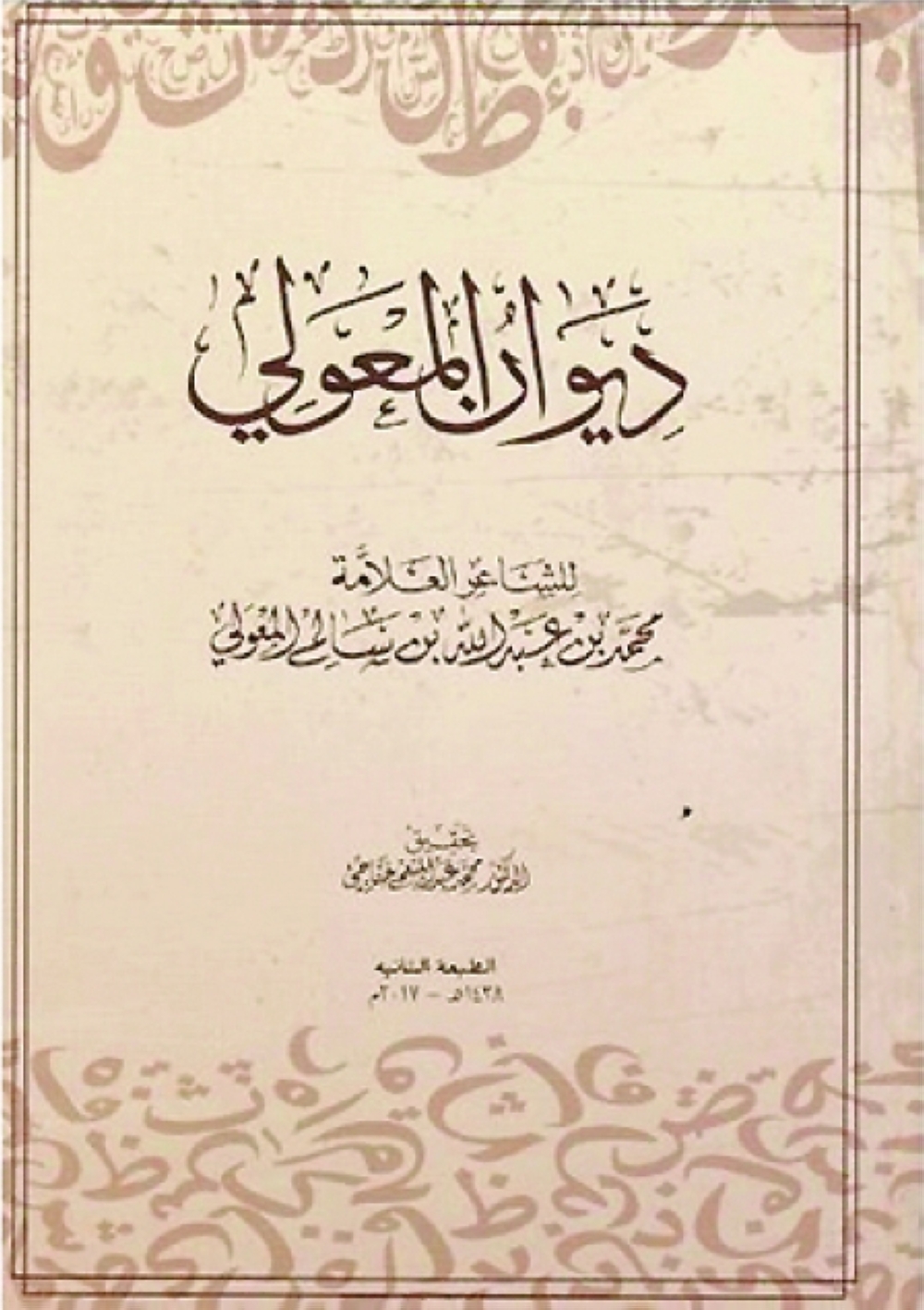






Panegyric poetry constitutes the largest single body of work within the Omani poetic tradition. This is evident in many surviving diwans, from those of Ibn Duraid, al Sattali, Al Kidawi, Al Habsi, Al Maawali, Khalaf bin Sinan, Bashir Al Fazari, Ibn Ruzaiq, Ibn Araba, Abu Muslim Al Bahlani, Abu Al-Sufi Al Majizi, Ibn Shaikhan and Sayyid Badr bin Hilal al Busaidy, among many others.
Among the most distinguished practitioners of this genre was the poet Mohammed bin Abdullah al Maawali, who lived during the seventeenth and eighteenth centuries. His panegyrics were devoted primarily to the Yaaruba imams, their governors and judges. His poetry displays a number of striking characteristics that make it worthy of close reading and study.
The Immortality of the Patron
While rulers and noblemen rewarded poets generously for their praise, many poets viewed such rewards as fully deserved. Wealth disappears and people pass away, but poetry endures. Through their verses, poets believed they granted their patrons a form of immortality.
Arabic literary tradition preserves a famous anecdote about Caliph Umar ibn al Khattab and a descendant of Hurm bin Sinan, the celebrated Arab chieftain praised by the poet Zuhayr ibn Abi Sulma. After hearing some of Zuhayr’s verses, Umar remarked: “He spoke well of your father.” The man replied, “And we rewarded him well.” Umar then responded: “What you gave him has vanished, but what he gave you remains.”
Omani literature contains a similar story. Ibn Ruzaiq relates that Sultan Abu Al Arab al Nabhani once sent the poet Al Sattali a thousand dinars and luxurious garments for him and his family. When the poet’s daughter later damaged one of those garments, the Sultan’s daughter mocked her. Hurt by the remark, the girl returned home. Her father instructed her to reply: “Your father clothed us in garments that wear out, while we clothed him in garments that never fade.” When the Sultan heard what she had said, he acknowledged that she was right. The material gift would perish; the poet’s words would not.
The Omani poet Bashir al Fazari expressed the same idea:
The robe you gave shall fade with passing years,
My praise shall clothe your name beyond the spheres.
And elsewhere:
I’ll cloak you, son of Saif, in woven praise,
Whose threads no hand of Time can fray or raze.
Al Maawali repeatedly emphasised this belief. In one poem addressed to Imam Bilarab bin Sultan, he compares his poem to a bride:
Accept a bride whom fertile thought conceived,
A maiden pure, by none yet e’er achieved;
She shines above her sisters far and wide,
With gems of wisdom for her only pride.
Your noble name she’ll keep in living light,
While stars still wheel across the vault of night.
He makes the same point elsewhere:
Be generous with the wealth that fills your hand —
It fades, while praise for you shall ever stand.
Seeking Reward
Believing that their art conferred lasting honour upon their patrons, poets often felt no embarrassment in asking for material reward. They regarded themselves as creators whose talents deserved recognition, much as skilled craftsmen deserved payment for their work.
Al Maawali openly sought generosity from his patrons, reminding them of their long-standing kindness towards him:
O King in whom our hopes and wishes rest,
We wait upon a need long unexpressed;
For never have I raised a seeking hand
But found your bounty flowing at command.
How could I e’er deny such gifts bestowed,
From childhood’s dawn along life’s winding road?
Addressing Imam Sultan bin Saif, he writes:
I have called upon you — answer my appeal,
O summit of honour and generosity.
Rain upon me clouds of silver,
From hands flowing like seas.
In another poem, he personifies his poem as a beautiful maiden approaching the patron in search of reward:
Here comes a gift from loyal thought arrayed,
In robes of praise and splendour finely made;
A maiden born of fancy’s noble fire,
Deserving kindness, welcome, and desire.
Noble her lineage, matchless her grace,
Beauty and brilliance shining from her face.
Attend her words when she proclaims your fame,
For you alone are worthy of her claim;
Bestow your bounty freely, full and fair,
She comes in hope of favour from your care.
Exalting the Patron
Al Maawali elevates his patrons beyond the ordinary limits of human nature. He presents the praise of righteous imams as a virtuous act through which he hopes to earn reward in both this world and the next.
He writes:
Through praising you I seek tomorrow’s grace,
And hope in Heaven to find a lasting place.
Elsewhere he declares:
The praise of the Imam is an intercession
Desired for a day from which there is no escape.
And again:
My praise of him is a faith in itself;
I fear no sin through it.
For Al Maawali, obedience to the Imam is inseparable from obedience to Allah. The Imam embodies knowledge, justice and compassion. Consequently, praising such a figure becomes an honourable act worthy of divine reward.
This conviction occasionally led him towards bold exaggeration. In one controversial passage, he places the recitation of his poem alongside the recitation of sacred texts. Many readers regarded this as excessive, though it may also be understood as a poetic expression of the moral seriousness with which he viewed his work.
The Poem as Woman
One of the most distinctive features of Al Maawali’s panegyrics is his tendency to imagine the poem as a beautiful woman. Through this process of personification, the poem becomes a radiant bride, noble in lineage and unsurpassed in beauty:
Hear her — an Arab maiden fair and bright,
Like beauty’s queen adorned in purest light;
No flaw resides within her woven lays,
Save that they darken envious foes with blaze.
Elsewhere he writes:
Here stands a bride born of inventive art,
Outshining sunlight with her radiant heart;
To you alone I dedicate her grace,
So clothe her well with kindness and embrace.
The poem becomes simultaneously bride, sun, moon and constellation. Free from blemish, it deserves a generous dowry:
Here is a bride from a faithful heart,
Bestow your gifts and play a noble part;
She shines like moonlight flooding through the sky,
Or like the Pleiades that glitter high.
She bears no fault except that jealous foes
Feel in their hearts the wound her beauty throws.
Pay well her dowry, lavish and complete,
For honour such as hers deserves no less a treat.
Poetic Self-Confidence
Another notable feature of Al Maawali’s poetry is his remarkable confidence in his own talent. He frequently presents himself as a singular poetic genius whose work surpasses that of others.
Addressing Imam Bilarab, he writes:
Unique in generosity are you,
As I in verse stand singular and true;
Accept this praise that Eloquence has sent,
Surpassing all the songs that others vent.
He later compares his poetry to that of the great classical masters Al Buhturi, Al Mutanabbi and Abu Tammam:
I scatter strings of pearls before your throne,
Outshining every gem that kings have known;
Receive them pure, untouched by craft or guile,
Brought to the finest Imam of our while.
They match Al Buhturi in grace and art,
Al Mutanabbi in mastery and heart,
And Abu Tammam in richness of design,
With meanings deep and language clear and fine.
Al Maawali believed deeply in both his poetry and his patrons. For him, honour was shared between the praised and the praiser. The patron achieved immortality through the poet’s verse, while the poet earned distinction through preserving the achievements of leaders, judges, scholars and rulers. In this vision, the poet’s pen was no less important than the soldier’s sword. Such values permeate Al Maawali’s panegyrics, making them a rich record not only of literary artistry but also of the intellectual and cultural ideals of their age.
Hassan al Matrooshi is an Omani poet and write. This is an adapted translation of the original Arabic article published in the print edition of the cultural supplement of the Oman newspaper on May 31.
Text by Hassan al Matrooshi and Translated by Badr al Dhafari
Oman Observer is now on the WhatsApp channel. Click here


